This question has come up from dance moms more often than I'd like to hear it: "Is it normal that my dancer is taking pain supplements and/or over-the-counter (OTC) meds such as Ibuprofen before every class?"
On one hand, it may make sense. One feels aches and pains; they feel they know where those aches are coming from -extensive training- so they think they're helping their body to just get through the day or another class without being distracted by that pain.
But what if I told you that the fact that the dancer even HAS to take something to numb this extensive enough pain is the problem in and of itself?
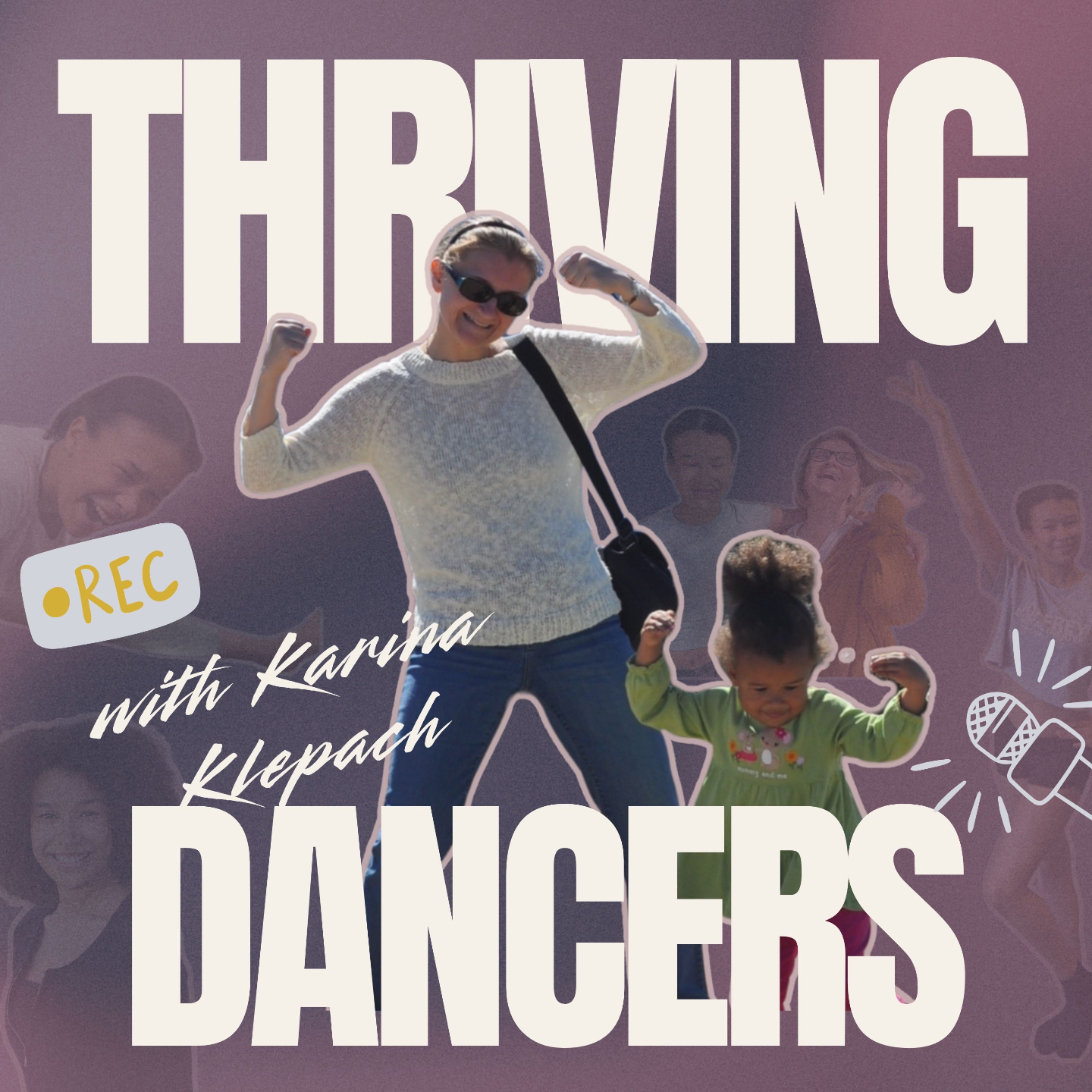
I talked about it in one of the latest podcast episodes.
And here's what I have to add to the podcast's explanation:
- Surface reason why a dancer is taking whatever they're taking.
- Deep reason why a dancer is taking whatever they're taking.
- Why the pain source is not managed.
- How long has this been going on?
- Type of OTC or supplement being taken.
I will dive deeper into each below, but for now, be sure to check the Thriving Dancers Podcast episode on self-medicating for dancers:
 |
1. Surface Reason.
When I say 'surface,' I'm referring to something that a dancer may think they're managing.
Is it muscle ache or muscle pain?
Is stretching too hard for them, so they experience pain and want to be able to push through it?
Anything else that's getting a dancer to make that decision that is based on assumptions, cover-up, and keeping face instead of information and facts?
Everyone wants quick solutions that resolve problems instantly without jeopardizing ultimate goals. For dancers, there's a frequent hyperfocus on the final outcome, with little regard for wellness during the process of getting there.
That's the culture of dance training, unfortunately, and we as dance moms need to learn these new filters that we must look through when we support our serious dancers.
Surface reasons have a sneaky way of making problems worse!
2. Deep Reason
Deep reason is the true underlying cause of the issue requiring medication.
Has a definitive diagnosis been made?
If pain persists, has appropriate imaging been done?
Is there a 'pain meds exit plan' in place that tapers down the need for frequent 'medicating' and a return to no pain meds activity?
The deep reason is essential in the case of 'self-medicating' because it actually takes away the uncertainty and even the surface reason, while placing a constructive plan for using OTCs and supplements in a way that produces results without causing more harm.
3. Why the pain source is not managed.
My first instinct when these questions come up is to understand why the primary source of the dancer's pain is not being managed.
It is one thing to help manage a short-term acute issue like a sprained ankle or take a few anti-inflammatory options to help manage a painful period. But to be experiencing pain and persistent aches that prevent a dancer from fully functioning, unless they medicate, is a problem in and of itself.
Dance training can be extreme -especially for serious and pre-pro dancers. But continuous medicating is not normal, no matter what you heard.
- Yes, there's a greater load on the body!
- Yes, there's microdamage that happens to the body with overtraining and even with extensive training done for hours daily.
- Yes, other factors at play make the inflammation from overtraining and the stress associated with it more extreme for dancers.
AND YET, the normalization of doing anything it takes to just push through this one class, this one performance at a time, will build over time into an unusable dance instrument called a body.
This is honestly the most frustrating aspect of the dance industry for me. Push through until they break or become numb.
WHY?
No, really. Why?
How does this make a better dancer?
Are we training Marine Corps soldiers to go to battle? Or are we training artists who use their bodies to express true human essence on stage, so the audience can feel and experience those emotions with and through them?
What is even crazier to me is that this process begins earlier and earlier for dancers. I've witnessed seven-year-olds being pushed to exhaustion with competitions, overtraining, dieting, and mental exhaustion. I honestly cannot see how that makes better dancers, but I can absolutely see how that makes miserable children. And no, I don't believe those parents who tell me, "But my child looooves to dance; I can't make them stop. So we HAVE to keep pushing them."
I better stop here. This is a whole new podcast episode in the making. What I want you to take away from this point, specifically, is that self-medicating for an issue that hasn't been addressed at the source just doesn't make sense. It's like putting a SpongeBob Band-Aid over a nasty fracture.
4. How long has this been going on?
This does tie with point #3 above, but it deserves its own space.
If the issue is short-lived, like an achy thigh muscle, for example, and one takes some curcumin and/or extra omega-3s like krill oil to help bring inflammation down. Then the next day the pain is gone; it is considered 'short-lived' in my books.
But when a dancer keeps experiencing pain and aches each time they step on that Marley floor, and it's been several days, weeks, and sometimes months -that is most definitely a 'long-term' issue in my books.
I'd also ask:
Are the studio/teacher and the parent (if the child is away at training) aware of the diagnosis and the underlying issue?
This is probably a loaded question because it can really illustrate that many dancers often keep issues they experience to themselves.
My own dancer kept her knee pain from me for nearly 2 years until it became unbearable, yet, I remind her every day to listen to her body.
Something about the concept of 'That's dance. It's normal' that we came to accept as dance parents, myself included.
It doesn't mean we have to be super hypervigilant about each ache and pain. And some aches are indeed part of that 'normal' category. But when we ignore it, self-medicate, and hope it goes away after it's been weeks, that's where we need to look at it differently.
5. Type of OTC or Supplement being taken.
There are many types of aches and pains support one can use:
- NSAIDs: over-the-counter (OTC) meds that take away pain signals and sometimes help reduce inflammation at the site of pain by turning off inflammatory signals.
- Curcumin: active ingredient in turmeric, which has been shown to have strong anti-inflammatory properties that work with the same components as the NSAIDS but also have whole-body effects that help reduce inflammation and immune system response in a complex, integrated process.
- Omega-3s: these are probably the most researched anti-inflammatory supplements and have quite a lot of good data that shows their effectiveness as anti-inflammatory supplements for the whole body.
- And more: There are multiple other options that are coming out, and we'll do a separate newsletter and probably podcast episode on it as well because there's a lot more info than I want to add to this already long letter.
The reason it matters what the dancer is self-medicating with is the potential issues we'd need to consider.
Taking Omega-3s daily is actually a common and standard recommendation by holistic health practitioners. But increasing the doses can cause issues like blood thinning (if taken at much higher doses) and a few other things. So when dancers take a lot more for their pain than they normally take, there are precautions they need to consider.
Curcumin is also a great supplement, but it is only helpful in certain situations at much higher doses that need to be monitored by a health practitioner. Some research does show Curcumin's potential affinity for iron, so especially with higher doses of this supplement in someone who already has iron deficiency, this can be a major problem.
And then, of course, there are the NSAIDs -something I've researched at my Master's Dissertation level and found research that says these drugs actually can prevent appropriate healing at the site of injury.
That's because we forget that inflammation (short-term) is actually a good thing. If we stop all the inflammatory processes at the site of injury, regardless of how big or small the injury is, it means we're not providing that area with the repairative components needed to repair.
Also, NSAIDs do have quite a few extensive side effects that all health providers warn their patients about. Those side effects don't pick and choose which people they'll affect. The mechanism of action for these drugs interferes with some natural physiological processes in the body, so they're bound to cause issues with long-term use, especially.
Takeaway from all above: self-medicating without knowledge can be considered rather irresponsible and can create far more issues than one is trying to solve.
TO DO THIS WEEK
- If your dancer is away and they told you they're self-medicating, ask them the questions we talked about today and maybe even share this article with them.
- If self-medicating has been going on for a few days and there is little to no change, have the courage to seek answers NOW. Waiting to get care should not be an option if something feels off!
- Listen to the podcast episode on self-medicating and share it with your dancer and/or another dance mom who needs to hear it; and let me know what you want to learn about next!
Additional Resources at Thriving Dancers
So many moms ask me all the time: "Where do you get your supplements? What essential oils do you use? What's the best brand? Where do you get this device? What is the best XYZ?"
Instead of repeating, and repeating, and repeating myself, I decided to add an 'Honest Reviews' page to our website where we'll post reviews of various products we use. I have no affiliate links or commissions from these, so these are true and honest from our use of the products, my extensive research, and trials of various products from juicers to where you can get the cleanest and most affordable wild salmon ;)
Yes, I will cover it all because...
Dance moms' most precious commodity is TIME,
And I'd like to help you save time by cutting the time it takes to 'figure out' yet another thing you have to decide about!
Check out the reviews here, and please let me know what else you want to know: https://moms.thrivingdancers.com/blog
New tool for dance moms!
We'd love to test a new tool to help dance moms during the dark decision-making times when their dancer is injured. If you'd be interested in testing it out for free for the 'cost' of your honest feedback. We'll send a separate email with the invite and more information when it's ready.
And as always...
...Remember to listen to the latest podcast episode of Thriving Dancers Podcast (listen here). And if you have any follow-up questions on this newsletter or podcast, send me a DM on Instagram or email me your takeaways, questions, or concerns. I'll review them and give you my thoughts on what your next step could be.
team@thrivingdancers.com
PS: At Thriving Dancers, we don't use AI to write our content! We do use it to help create helpful infographics, check grammar, and pull specific research studies we're looking for. So what you'll always get from Thriving Dancers is human-synthesized, thought-through content that's always authentic! That's why sometimes you'll see NotebookLM on some of the included images, if we use it to create a helpful diagram :)
Dance Mom: Welcome to Thriving Dancers World! If you received this email as a forward from another mom and found it helpful, please sign up HERE so you won't miss out on future updates from us. You never know, something in our newsletter might have the power to transform your dancer's dreams for the better!