It has been said by many spiritual teachers
Change your perception, and your world will change
NOT the other way around.
This concept intrigued me for the longest time, especially because I realized at one point that I've been practicing it for decades. Also, because of the way that I observed it played out in life, for better and for worse, with myself and with people around me.
When two people are diagnosed with the same disease, have the same type of trauma (physical, psychological, or emotional), the outcomes vary greatly.
And I always wanted to know WHY?!
Is it just the positive thinking that's missing? Should we just be "Pollyanna-optimistic"? Or is there more to it?
As I work through my doctoral integrative neuroscience course this semester, I dove deeper into perception, mindset, and health outcomes research, and what I found really clicked for me at last.
But first, a mini-disclaimer:
Most scientific research is set out to disprove hypotheses, that is, to find proof that what we say is, actually ISN'T, and that there's proof for that disproval. That is what makes it the most challenging in the world of such subjective work as mindset, perception, beliefs, etc.
So all that I write here, even with some substantial research backing, is just my informed opinion, life experiments, and not necessarily 'scientific' interpretations.
Consider the idea that our perception is shaped by our beliefs. We can only understand something based on previous experiences; otherwise, the human world just would not make sense.

That is, if you see something sharp, you know, based on your previous experience, that if you touch it with your finger, you'll get poked and will likely experience pain, may even bleed a little or a lot, and will generally have an unpleasant experience.
To think about this in any other way would require you to have an alternate experience OR a strong conviction that previous experience does not determine future outcomes.
You may be asking, "Nice concept, Karina, but how in the world does this apply to my dancer?" Bear with me, I promise I will get to that point in a minute!
When we experience an event, our body records it in many places (emotionally, physically, psychologically, and biochemically). That is why it is often so challenging to 'see' or 'perceive' different outcomes, because to our core, we've programmed our body and mind to an outcome and the sequence that leads to that outcome.
Joe Dispenza often says that:
"Knowledge is for the mind, and experience is for the body."
Now, remember, our body records our experiences in various places, including the mind and the body. Kinesthetic memory is very potent and that is what our dancers really perfect in their training.
But this is what also makes them vulnerable to the negative aspects of this perfected 'kinesthetic memory.'
Let me explain.
- The overwhelming majority of dancers 'normalize' pain, consider it 'normal' to overtrain and exhaust their body without sufficient nutrition and recovery, and associate negative psychological and emotional aspects with doing the normally-accepted positives (such as rest, recovery, certain nutrition).
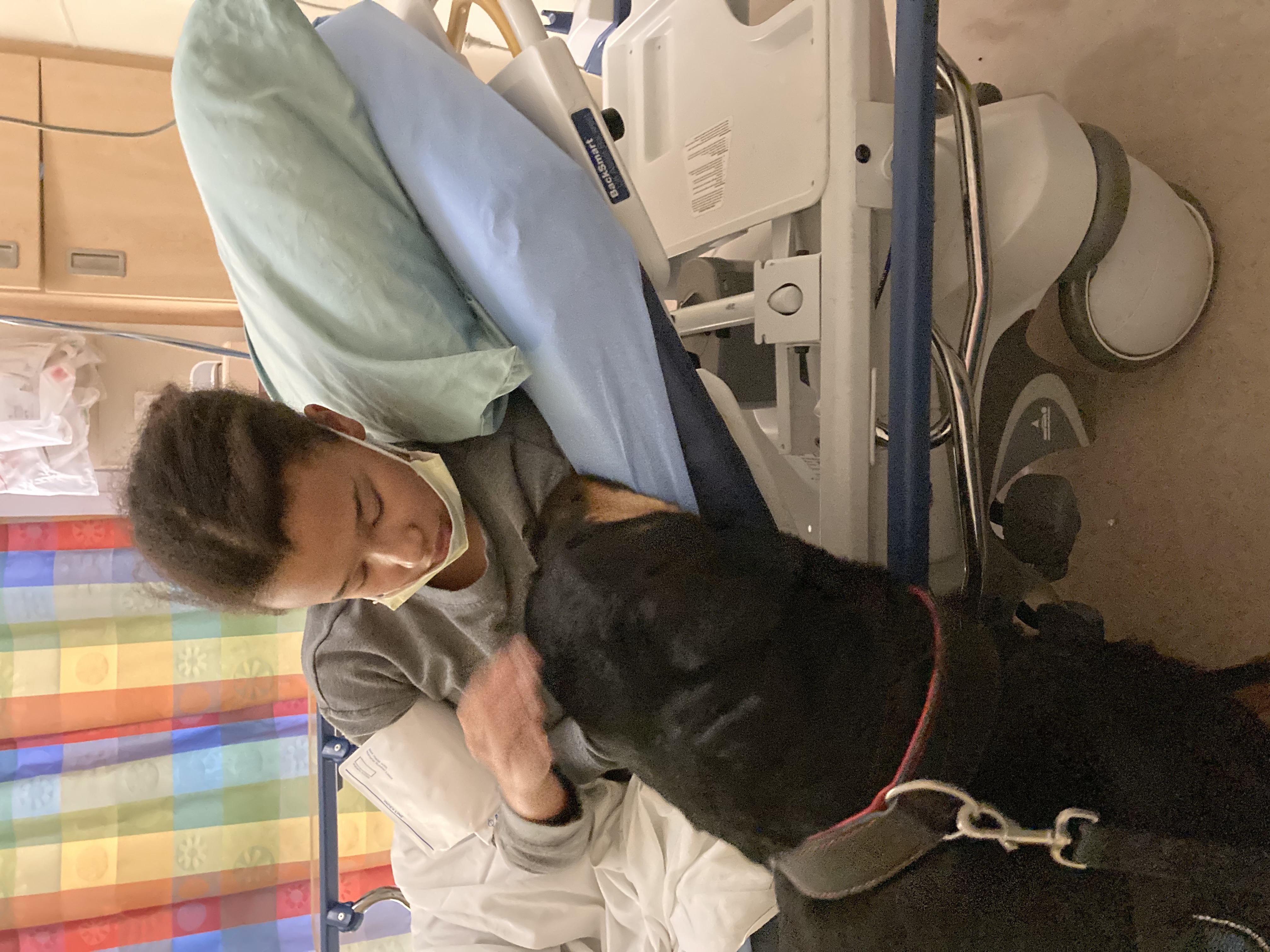
- When there's an injury, they tend to catastrophize it because of the emotional and psychological aspects of the injury, not only because it is an injury. A foot fracture in a non-dancer compared to a dancer is perceived differently, and therefore, more or less emotion goes into the injury as well as the healing process.
- There is an automatic meaning that's created when a dancer experiences anything out of the planned/ordinary.
The good news
We can train our mindset, add body retraining, and adjust our programming. Sounds simple enough, but it requires consistent concerted effort all the time, something that most people are not willing to put in.
If your dancer gets injured or has an unpleasant studio experience, teach them to reframe the situation to help them see it from a different perspective.
For example, an injury doesn't have to take X number of days that the medical establishment says it should take. Those are just statistics, and there's always that small percentage they leave out as outliers (those not fitting into the numbers who do better).
Injuries can also be great opportunities to learn to train differently and return stronger.
The meaning we create about ANY event in our lives forms our perception of that event and ultimately can determine the biochemical cascade of events that our body produces to help or not help the healing that needs to take place.
This may sound too far off, but Dr. Langer's (Harvard Professor and Researcher) studies suggest just that. Being mindful about each thing we do, not adding meanings we don't want to experience, helps create outcomes that we actually want to see.
Our dancers have an intense life of experiences that, depending on the studio and our own approaches to their wellness and training, can significantly shape the outcome of their injuries, career, and life as a current/former dancer as a whole.
TO DO THIS WEEK
- Pick 1-3 (max) experiences or issues with your dancer that they may want to reframe.
- Work on coming up with multiple perspectives and assess how they feel for your dancer, and if that's something they can stick with, at least temporarily.
- Notice any new negative thoughts that may come up about the issues you picked to work on. Ask questions like 'is it really true?' and 'who really determines the actual outcome of this situation?' and 'what would make it have a different outcome than everyone keeps saying how it "should" be?'
Something New at Thriving Dancers
So many moms ask me all the time: "Where do you get your supplements? What essential oils do you use? What's the best brand? Where do you get this device? What is the best XYZ?"
Instead of repeating, and repeating, and repeating myself, I decided to add an 'Honest Reviews' page to our website where we'll post reviews of various products we use. I have no affiliate links or commissions from these, so these are true and honest from our use of the products, my extensive research, and trials of various products from juicers to where you can get the cleanest and most affordable wild salmon ;)
Yes, I will cover it all because...
Dance moms' most precious commodity is TIME,
And I'd like to help you save time by cutting the time it takes to 'figure out' yet another thing you have to decide about!
Check out the first review here, and please let me know what else you want to know: https://moms.thrivingdancers.com/blog
And as always...
...Remember to listen to the latest podcast episode of Thriving Dancers Podcast (listen here). And if you have any follow-up questions on this newsletter or podcast, send me a DM on Instagram or email me your takeaways, questions, or concerns. I'll review them and give you my thoughts on what your next step could be.
team@thrivingdancers.com
PS: At Thriving Dancers, we don't use AI to write our content! We do use it to help create helpful infographics, check grammar, and pull specific research studies we're looking for. So what you'll always get from Thriving Dancers is human-synthesized, thought-through content that's always authentic! That's why sometimes you'll see NotebookLM on some of the included images, if we use it to create a helpful diagram :)
Dance Mom: Welcome to Thriving Dancers World! If you received this email as a forward from another mom and found it helpful, please sign up HERE so you won't miss out on future updates from us. You never know, something in our newsletter might have the power to transform your dancer's dreams for the better!